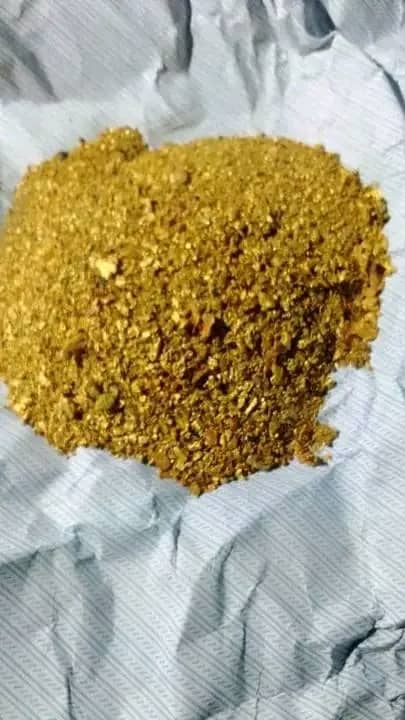
If you have searched for the raw gold price, you have probably noticed that nobody quotes a single figure for it. That is because raw gold, meaning natural nuggets and alluvial gold dust that have not yet been refined, is not a standardised product. Two parcels of the same weight can be worth noticeably different amounts depending on how much gold they actually contain and how confident the buyer can be about that number.
This guide walks through the method that professional buyers and refiners use: start from the international spot price, adjust for fineness, multiply by weight, and then apply a discount that reflects refining costs and risk. Once you understand the formula, you can sanity-check any quote you receive, whether you are a refiner, a jeweller or an investor buying raw gold for the first time.
What Is the Raw Gold Price?
The raw gold price is the value of unrefined gold, usually expressed per gram or per troy ounce of the material as it is delivered. It is always derived from the spot price of gold, which is the benchmark price for one troy ounce of pure (fine) gold traded on the international wholesale market. Spot prices are quoted in US dollars and move continuously while markets are open.
Spot assumes pure gold that is ready to deliver in a recognised form. Raw gold is neither pure nor ready, so its price has to be worked back from spot. You can see today’s indicative spot figure and run your own numbers on our live gold price and raw gold calculator.
The Three Inputs: Spot Price, Fineness and Weight
Every raw gold valuation comes down to a simple formula: value of gold content = spot price per gram × fineness × weight in grams. Each input deserves a closer look.
Spot price per gram
Spot is quoted per troy ounce, and one troy ounce equals 31.1035 grams. It is not the same as the everyday (avoirdupois) ounce of about 28.35 grams, a common source of confusion. To get the 1 gram gold price, divide the per-ounce spot price by 31.1035.
Fineness
Fineness is the share of the material that is actually gold, expressed as a percentage or in parts per thousand. Fineness of 999.9 means 99.99% gold. For raw gold, fineness is only known with confidence after an assay, which is why a credible assay certificate matters so much.
Weight
Weight should be measured on a calibrated scale in grams. Raw gold, especially dust, can contain moisture, sand and black sand (magnetite), so buyers often look at weight after cleaning and drying, not the weight claimed at the point of sale.
Karat to Fineness: A Quick Reference
Natural gold is often described in karats, a scale out of 24. Converting karats to fineness is simple arithmetic: divide the karat number by 24. The table below lists the conversions buyers use most often.
- 24K: 99.9% or higher (999 to 999.9 fineness), the standard for investment bars
- 23K: about 95.8% (958 fineness)
- 22K: 91.67% (916.7 fineness), a common range for good-quality natural nuggets
- 18K: 75% (750 fineness)
- 14K: about 58.3% (583 fineness)
A Worked Example (Hypothetical Figures)
The numbers below are a hypothetical example to show the method. They are not a quote and do not reflect the current market. Always use the live spot price when you do your own calculation.
Assume a hypothetical spot price of USD 2,500 per troy ounce, and a 50-gram parcel of nuggets that an assay shows to be 22K (91.67% fine).
- Spot per gram: 2,500 ÷ 31.1035 = about USD 80.38
- Fine gold content: 50 g × 0.9167 = 45.835 g of pure gold
- Value of gold content: 45.835 × 80.38 = about USD 3,684
- Illustrative discount of 4% for refining and risk: about USD 3,537 offered for the parcel
What the example shows
Notice that the parcel’s 50-gram gross weight is far less important than its 45.8 grams of fine gold. A one-karat difference in purity would move the value by roughly 4%, which is often larger than the dealer’s margin. That is why the assay, not the scale alone, drives the price of raw gold.
Why Raw Gold Trades Below Spot
Buyers new to raw gold are sometimes surprised to be offered less than the spot value of the gold content. The discount is normal and reflects real costs and risks that refined bullion does not carry.
- Refining costs: nuggets and dust must be melted and refined to reach investment-grade purity, and refiners charge for that work.
- Refining losses: some material is lost during melting and refining, and the final recovered weight is rarely identical to the assay estimate.
- Assay uncertainty: a surface reading on an irregular nugget may not represent the whole piece, so buyers price in a margin for error.
- Impurities: silver is the usual companion metal in natural gold, along with copper, iron and other minerals that add weight but not gold value.
- Logistics and compliance: export documentation, insurance, transport and due diligence all add cost before the gold reaches a refinery.
When a discount is too good to be true
A modest discount to spot is expected. An offer far below spot, especially from a seller you cannot verify, is one of the most common warning signs of fraud in the raw gold trade. Our guide on how to buy physical gold safely covers the red flags in detail.
How Nuggets and Dust Are Priced Differently
Natural nuggets and gold dust share the same formula but behave differently in practice. Dust is usually more uniform once it has been cleaned, and its purity can be measured on a representative sample. Nuggets vary piece by piece, and attractive specimen nuggets can occasionally sell above their gold content to collectors, while ordinary nuggets are priced on gold content like any other raw gold.
YNM Gold Sellers supplies natural gold nuggets of 22–23K from the DRC and East Africa and 99.9% gold dust from Kenya, each with an independent third-party assay certificate. For a broader comparison of the three main physical forms, read gold bars vs nuggets vs dust.
How to Check a Raw Gold Quote
Before you accept any raw gold price, run through these checks. They take minutes and protect you from the most expensive mistakes.
- Confirm which spot price the quote is based on, and at what time it was taken.
- Ask for the fineness on the assay certificate and check that it matches the karat claim.
- Recalculate the fine gold content yourself: weight × fineness.
- Ask what the discount or premium covers, and whether shipping, insurance and export fees are included.
- Make sure the assay comes from an independent laboratory, as explained in our guide to verifying gold purity.
Frequently Asked Questions
How is the raw gold price calculated?+
Raw gold is valued as spot price per gram × fineness × weight in grams, minus a discount that covers refining costs, refining losses and assay uncertainty. The spot price per gram is the per-ounce spot price divided by 31.1035.
Why is raw gold cheaper than the spot price?+
Spot refers to pure, refined gold. Raw nuggets and dust contain impurities, must be refined before they reach investment grade, and carry some uncertainty about their exact purity, so buyers pay less than the spot value of the gold content.
What is the 1 gram gold price?+
Divide the spot price per troy ounce by 31.1035 to get the price of one gram of pure gold, then multiply by the fineness for lower purities. For example, 22K gold contains 91.67% gold, so its value per gram is about 91.67% of the pure-gold gram price.
How pure are gold nuggets usually?+
Natural nuggets vary by deposit. Many good-quality nuggets fall in the 20–23K range, with silver as the main other metal. Only an assay can confirm the purity of a specific nugget or parcel.
More Gold Buyer Guides
- How to Buy Physical Gold in the USA: A Practical Guide to Bullion · Buyer Guide
- Buying Gold Bullion in the UK: VAT, Tax and What to Check · Buyer Guide
- Investing in Gold in Canada: Should You Buy Gold? · Market Analysis
This article is general information, not financial, tax or legal advice.